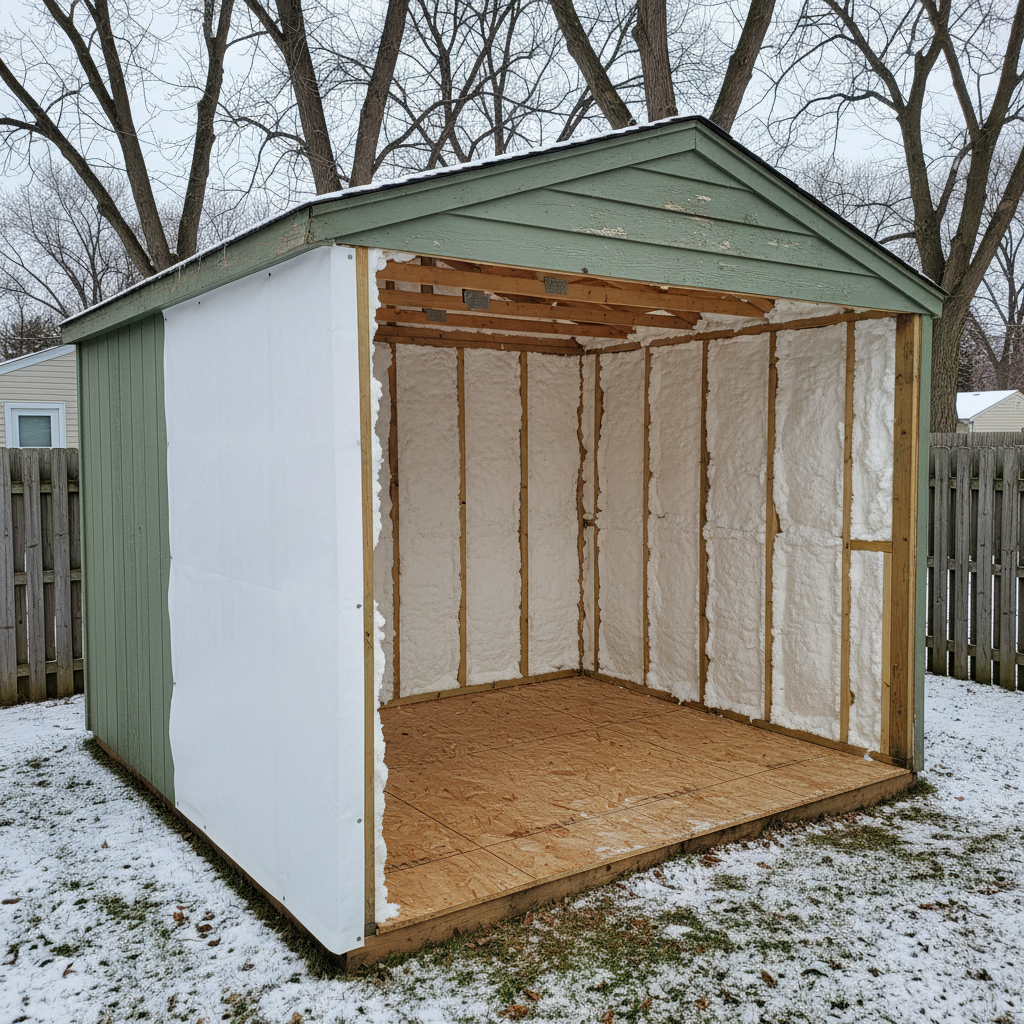
You've got a shed, right? Maybe it's where you keep the lawnmower, or maybe it's your personal workshop. Or hey, maybe it's just the spot for all the stuff that won't fit in the garage. Whatever you use it for, if you haven't thought about insulating it, you're really missing a big chance to protect your investment and make that space way more useful all year long.
Around Arlington Heights, especially in older spots like Scarsdale or Stonegate, I see a lot of sheds that are basically just fancy wooden boxes. They get absolutely sweltering in summer and bone-chilling cold in winter. That's not just uncomfortable if you're trying to get some work done out there; it's genuinely bad for everything you've got stored inside. Tools rust, paint freezes and thaws (which ruins it, by the way), chemicals break down, and anything with a battery gets hammered by those wild temperature swings. So, let's talk about how we can fix this.
When's the Best Time to Insulate a Shed?
Timing matters quite a bit when you're thinking about insulating any building, even a small one like a shed. You really want to steer clear of the absolute worst weather, both for your own comfort and for the materials you're working with.
Spring (Late April to Early June): This time is often perfect. The ground has usually thawed out, so you won't be slogging through mud if you need to move materials around. Temperatures are mild, meaning you won't be sweating buckets or freezing your fingers off. Plus, you'll get ahead of the brutal summer heat, making your shed usable for those summer projects right away.
Fall (September to Early November): Another fantastic window. The summer humidity has packed up and left, and the air feels crisp. It's a comfortable time to work, and you'll have that insulation installed before the really cold Illinois winters hit. This is especially smart if you plan on using the shed as a workshop through the colder months.
Summer (July-August): Sure, you *can* do it, but it's no fun. If your shed doesn't already have shade, you'll be baking in there. High humidity can also be an issue, especially if you're using certain spray foam products that need specific conditions to cure. We've certainly done plenty of summer jobs, but honestly, if you have a choice, pick another season.
Winter (December-March): Unless it's some kind of emergency, or your shed is already heated, I'd generally say skip it. Dealing with frozen ground, snow, and numb fingers just makes everything harder and slower. Some insulation materials also work better when you install them in moderate temperatures. And really, who wants to be out there in a blizzard?
Basically, you're looking for a stretch of a few days where temperatures stay consistently above freezing, ideally somewhere in the 40s to 60s Fahrenheit, and without too much rain or extreme humidity. Here in Arlington Heights, we get plenty of those days in spring and fall, thankfully.
Weather Conditions That Affect the Work
Beyond just the season, specific weather conditions can really impact your shed insulation project. It's not just about how comfortable you are; it's about making sure the installation is top-notch.
Rain & High Humidity: If you're using something like fiberglass batts, you absolutely do not want them to get wet. Wet insulation loses its R-value, plain and simple, and can lead to mold issues down the road. Even with rigid foam boards, working in a damp environment just isn't ideal. For spray foam, humidity levels are super critical for proper curing, so we're always checking those readings.
Extreme Cold: Like I mentioned, it's tough on the person doing the work. But it can also mess with the materials themselves. Adhesives might not set right, and some foams can get brittle or just not expand the way they should. If you're using expanding foam from a can for gaps, it won't perform well if it's too cold.
Strong Winds: This might seem minor, but if you're cutting insulation outside or trying to fit it into tight spaces, a strong gust can make a huge mess or even create a safety hazard, especially if you're up on a ladder. It also makes applying spray foam tricky, as overspray can become a big problem.
We always keep a close eye on the forecast. A few dry, mild days are exactly what we need to get the job done right and efficiently.
Protecting Your Investment Year-Round
Once your shed is insulated, you've done a huge part of the job. But you still need to think about protecting it long-term. Insulation is great, but it's not a magic bullet if other things are failing, is it?
Ventilation is Key: Just like your house, a shed needs to breathe. Even with insulation, if you don't have proper ventilation, you can end up with condensation building up, especially during our humid summers and cold winters. This leads to mold, mildew, and rot. Simple gable vents or a ridge vent can make a big difference. If you've got a powered fan, even better.
Seal Up Those Gaps: Insulation is only as good as its air seal. Check around doors, windows, and any spots where wires or pipes go through. Use caulk or expanding foam to seal these up. You really don't want conditioned air escaping or unconditioned air sneaking in.
Roof & Foundation Maintenance: This might seem obvious, but a leaky roof or a foundation that's letting in moisture will totally undermine any insulation effort. Make sure your roof is in good shape, and your gutters are clean and directing water away from the shed's foundation. Here in Arlington Heights, with our freeze-thaw cycles, foundation issues can definitely pop up, so keep an eye on those.
Pest Control: Critters absolutely love insulation. Mice, squirrels, and even insects can nest in it, destroying how well it works and causing other problems. Make sure your shed is sealed up tight against pests. You might even want to add hardware cloth over vents.
Insulating your shed isn't just about feeling comfortable; it's about making your tools, equipment, and whatever else you store in there last longer. It turns your shed into a more versatile space, whether you use it for hobbies, storage, or even a quiet little retreat. If you're in the Arlington Heights area and want to chat about the best insulation options for your shed, give us a call at Allied Insulation. We've helped plenty of folks turn their drafty sheds into useful, protected spaces.