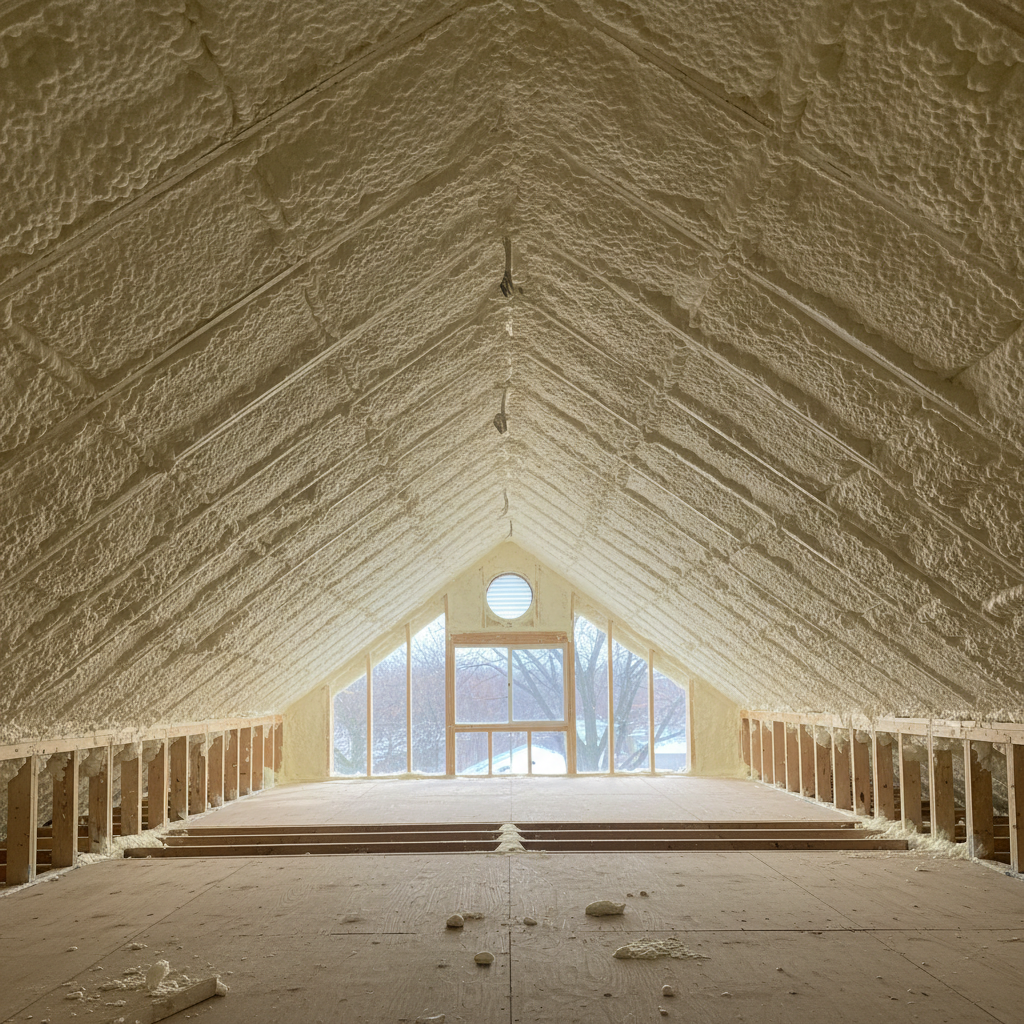
So, you're thinking about upgrading your home's insulation, and open cell spray foam has caught your eye. That's a smart move, really, especially for comfort and saving on energy bills, what with our wild Arlington Heights winters and those humid summers. But I've seen too many people mess up when they're planning or hiring for these kinds of projects. It usually ends up costing them more time, more money, and a whole lot of headaches later on. Let's talk about what you really need to watch out for.
Mistake #1: Not Really Grasping 'Open Cell'
Okay, this might sound super basic, but it's absolutely critical. Think of open cell foam like a sponge; it's soft, pretty flexible, and it actually lets moisture pass right through. That's a huge plus in certain spots, like walls or attics, where you might want to be able to spot a roof leak or some other moisture problem. Plus, it's generally cheaper than closed cell foam. The real mistake happens when homeowners—or even some less experienced contractors—try to use it where closed cell would be a better fit, or they just don't consider how permeable it is to vapor. Say you've got a crawl space that's always a bit damp. Just spraying open cell on the rim joists without dealing with the ground moisture or putting in a proper vapor barrier? That's just asking for trouble. You'll end up trapping moisture, and that's a perfect recipe for mold. Always, always understand what the material does and where it actually works best.
Mistake #2: Only Looking at the Lowest Price
I get it, we all want a good deal. Who doesn't? But when it comes to spray foam, the cheapest bid often turns out to be the most expensive one down the road. Why? Because putting in spray foam correctly is both an art and a science. It's way more than just pointing a gun and spraying. It involves:
- Getting the surface ready: Is the area clean, dry, and clear of debris? Are things like electrical boxes and vents properly taped off?
- Mixing and temperature: The chemicals need to be mixed at just the right ratio and sprayed at the perfect temperature for the foam to cure right. If it's too cold, too hot, or the mix is off, you get foam that's soft, crumbly, or doesn't expand like it should. That means lousy insulation and maybe even off-gassing issues.
- Even coverage and thickness: You need a consistent depth across the whole surface to get the R-value you're paying for. Any gaps, thin spots, or places with too much spray create thermal bridges and just waste energy.
- Ventilation: Especially in attics, you've got to make sure you're not blocking important ventilation pathways, unless the plan is to turn it into a conditioned attic space, of course.
A contractor who's much cheaper might be cutting corners on their equipment upkeep, the quality of materials, or—most often—on training and experience for their crew. Ask for references, check out their reviews, and don't be shy about asking detailed questions about how they do things. Good work isn't cheap, and cheap work, well, it's usually not good.
Mistake #3: Forgetting About Air Sealing & Ventilation
Spray foam is an amazing air barrier, no doubt, but it's not some magic cure-all. Lots of older homes in Arlington Heights, especially those built in the 50s and 60s around the Stonegate or Scarsdale neighborhoods, have tons of hidden air leaks. Just spraying foam over a leaky attic floor or rim joists without first sealing up the big holes (like plumbing stacks, electrical wires, or chimney chases) means you're still losing conditioned air. You're paying for the foam, but you're not getting its full benefit. Also, if you're sealing up an attic or crawl space, you really need to think about a new ventilation plan. Sometimes, sealing things up too tightly without proper mechanical ventilation can actually lead to problems with indoor air quality. A good contractor from Allied Insulation will talk to you about the whole system, not just the foam itself.
Mistake #4: Not Getting a Clear Plan of Action
This is where miscommunication can really bite you. Before any work even starts, you need to understand, crystal clear, exactly what's included. Does the quote cover removing old insulation? What about cleaning up all the debris? Are they sealing penetrations before they spray? How many inches of foam will they put down, and what R-value does that actually give you? What's the warranty look like? I've seen homeowners just assume certain things were part of the deal, only to find out they were extra, or not even in the plan at all. Get absolutely everything in writing. A detailed proposal protects both you and the contractor, you know?
Hiring for an open cell spray foam project is a pretty big investment in making your home more comfortable and efficient. So, do your homework, ask the tough questions, and don't rush into anything. You'll be glad you did when your energy bills drop and your home feels consistently comfortable, no matter what the Chicagoland weather throws at us.