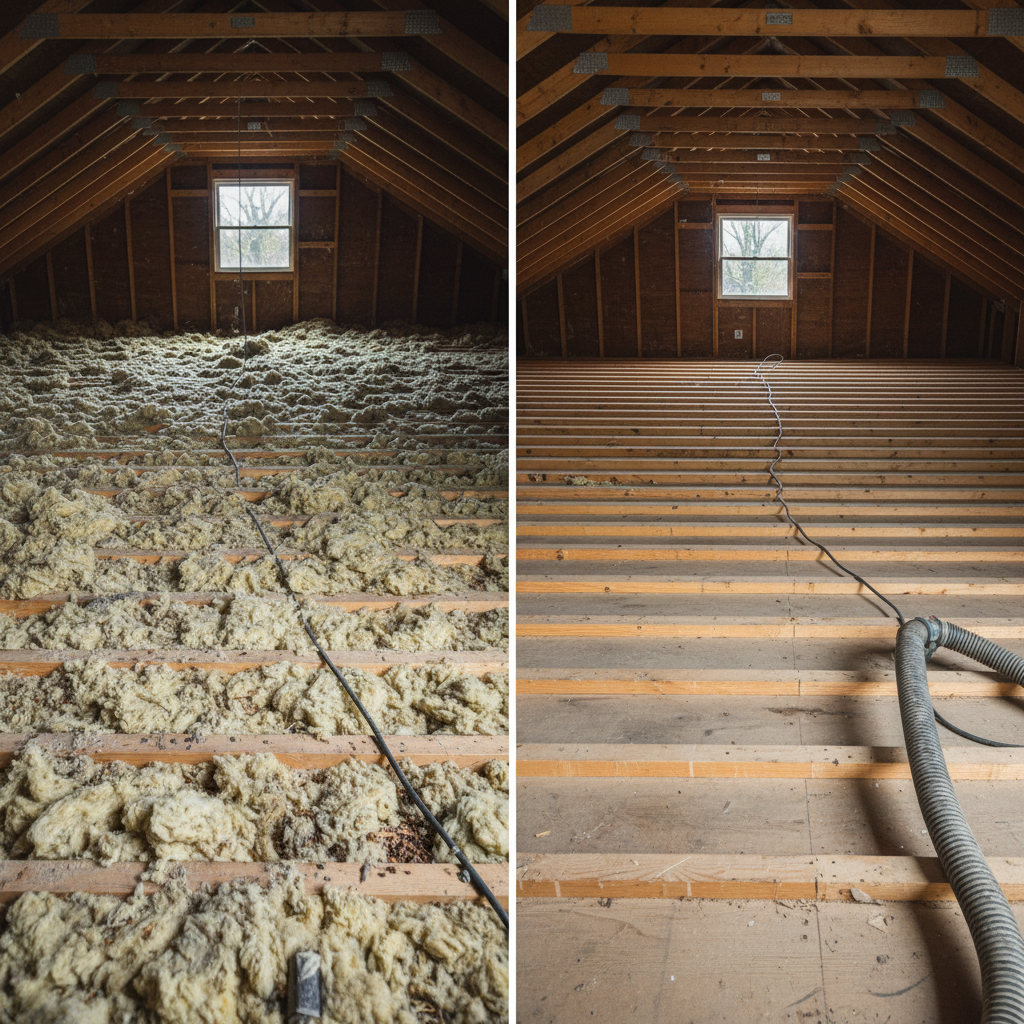
So, you've decided it's finally time to rip out that old, worn-out insulation. Good for you! Whether it's water damage, those pesky critters, or you're just itching for a serious energy upgrade, getting the old stuff out is absolutely key before you put anything new in. But how do you actually get it out? Well, you've got two main routes: vacuum removal or manual removal. Let's dig into what each one means for your Arlington Heights home.
Vacuum Removal: The Deep Clean Option
This is usually our top pick, especially if you've got blown-in insulation like cellulose or fiberglass. With vacuum removal, we roll out a big, powerful vacuum system—often parked right outside your house. Then, a long hose snakes into your attic or wall cavities, and we just suck all that old insulation right out.
Cost
Generally, vacuum removal costs more upfront than doing it by hand. You're paying for specialized equipment, the folks who know how to run it, and the proper disposal of the material. Think of it like this: it's hiring a professional cleaning crew with industrial-grade tools versus just handing someone a broom and a dustpan. The price difference can be pretty big, sometimes 20-40% more than a purely manual job, depending on how much insulation we're talking about.
What It Leaves Behind (and Why That Matters)
This isn't about how long the removal method lasts, but what kind of foundation it sets. A good vacuum job gets almost everything out. We're talking dust, tiny bits of debris, even those little rodent droppings that might be hiding. This means you're starting with a much cleaner slate, which is huge. A cleaner slate helps spray foam stick better, makes new blown-in insulation perform its best, and cuts down on lingering smells or allergens. There's no ongoing maintenance for the removal itself, but a thorough vacuum job really sets your new insulation up for maximum durability and performance. It's like prepping a canvas before painting, you know?
Appearance
When we're finished, your attic or wall cavity will look way cleaner. You'll actually see the joists, the wiring, the ductwork – everything will be exposed. It's a clean, empty canvas, just waiting for new insulation. This also gives us a chance to really inspect the structure for any hidden problems, like air leaks or damaged wood, that the old insulation might have been covering up.
Manual Removal: The Hands-On Way
Manual removal is pretty much exactly what it sounds like. Someone gets in there, bags up the old insulation by hand, and carries it out. This often works best for batt insulation, especially if it's still in good, solid pieces.
Cost
Manual removal usually looks cheaper on paper. You're paying for labor and disposal bags, simple as that. Less specialized equipment means lower initial costs. If you've got easily accessible batt insulation that's not too dusty or contaminated, this can seem like a budget-friendly choice.
What It Leaves Behind (and Why That Matters)
The biggest problem with manual removal is that it's just tough to get absolutely everything. Dust, small insulation bits, and debris often get left behind. It's just how it goes when you're scooping and bagging. This can leave you with a less-than-ideal surface for your new insulation. If there's mold or pest contamination, manual removal might not grab all the spores or droppings, which could lead to ongoing air quality issues or even attract new pests. You'll also probably have more dust floating around your home during and after the job, meaning more cleanup for you.
Appearance
It'll definitely look like insulation was removed, but it won't be nearly as spotless as a vacuumed space. You'll probably see some leftover dust and small fibers clinging to surfaces. It's not necessarily a disaster if your only goal is to clear out big pieces, but it's definitely not as 'clean.'
My Recommendation for Arlington Heights
Here in Arlington Heights, we work on all kinds of homes – from those charming older bungalows with plaster walls to brand-new constructions. We also get our fair share of brutal winters and humid summers, don't we? Because of our climate, and the common problems we see like ice damming from bad insulation or critters making homes in attics, I almost always suggest vacuum removal for blown-in insulation.
Why? First off, it's just a far more thorough job. You want to ditch every last bit of that old, potentially compromised material. If you're going through the hassle and expense of replacing insulation, you want a fresh start. Secondly, it drastically cuts down on the dust and debris that ends up in your living space during the removal. With manual removal, especially in an older home where the attic might not be perfectly sealed from your living areas, you're looking at a lot more dust filtering down. Nobody wants that, right?
For batt insulation that's clean and in good shape, manual removal can work. But even then, I'd recommend a good shop-vac cleanup afterward. If there's any hint of mold, moisture, or pests, vacuum removal is the only way to go to make sure you're actually getting rid of the problem, not just covering it up.
Yes, vacuum removal costs more. But when you think about the peace of mind, the cleaner air, the superior foundation for your new insulation, and the long-term performance benefits, it's an investment that truly pays off. We've done countless jobs for folks around Wildwood and Scarsdale, and the feedback is always the same: they really appreciate the thoroughness. At Allied Insulation, we're all about doing the job right the first time, and that often starts with a truly clean slate.