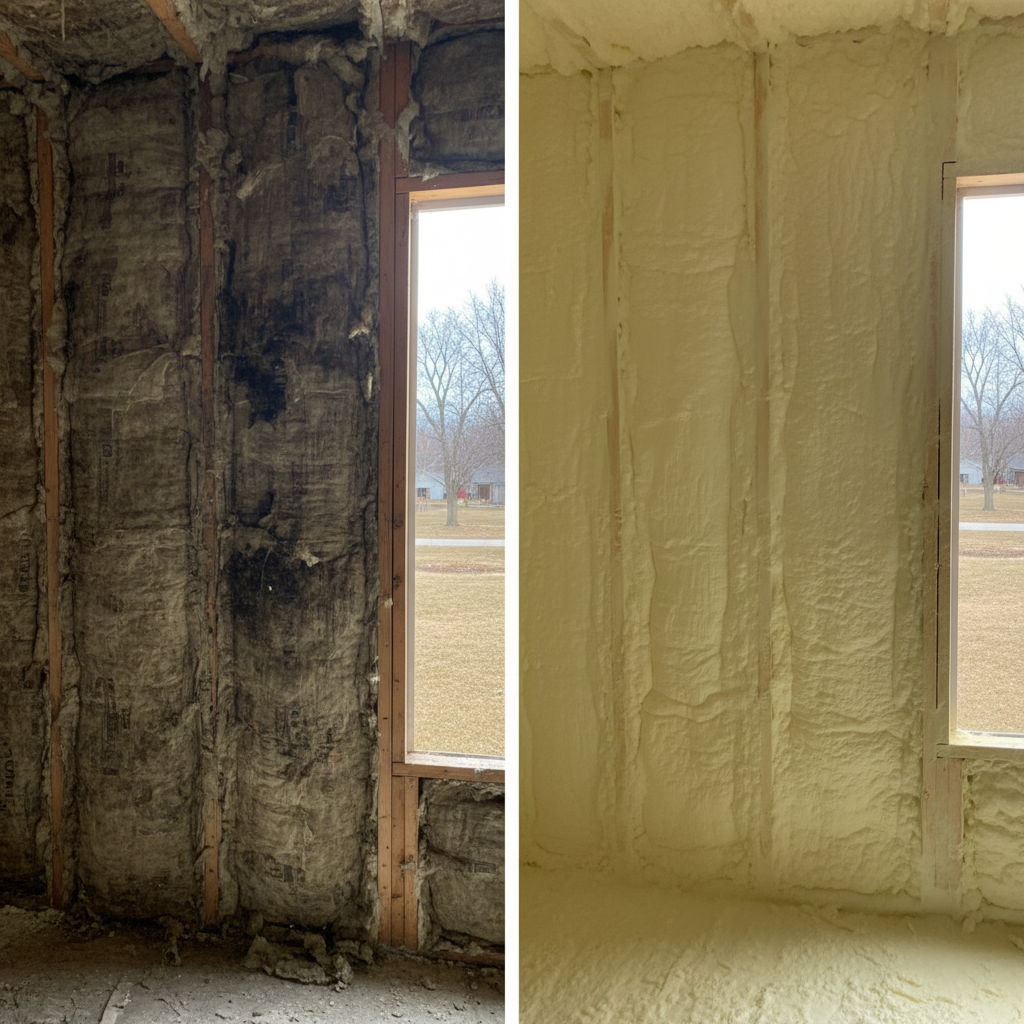
Alright, so you're looking into closed-cell spray foam. That's a smart move. It's fantastic stuff for really sealing up your home, cutting down on drafts, and lowering those energy bills. But when we talk about closed-cell, it's not always a one-size-fits-all kind of deal. There are two main ways we usually put it in, especially here in places like Arlington Heights, where we get those brutal winters and steamy summers. We call them 'flash and batt' and 'full closed-cell.' Let's dive into what each one means for you.
Flash and Batt: A Hybrid Approach
Flash and batt is pretty much exactly what it sounds like. We'll spray a thinner layer of closed-cell foam — usually an inch or two thick — right onto the sheathing in your wall cavities or roof deck. That thin layer does a killer job of air sealing, plus it acts as a vapor barrier. Once it cures, we come back and fill the rest of the cavity with traditional fiberglass or mineral wool batt insulation. It's a hybrid system, giving you the air-sealing benefits of spray foam but with the cost-effectiveness of batts.
The Pros of Flash and Batt:
- Cost: This is usually the big one. Because you're using less spray foam, flash and batt is generally more affordable upfront than going full closed-cell. If your budget is a major concern, this might be just what you're looking for.
- Performance: It still gives you excellent thermal performance. The closed-cell layer stops air leakage dead in its tracks, which, let's be honest, is often the biggest reason for energy loss. Then the batts provide the bulk R-value. You'll definitely notice a difference in comfort and lower utility bills.
- Moisture Control: That thin layer of closed-cell foam works as a great vapor barrier. This is super important in our climate, especially in older homes around, say, the Scarsdale neighborhood, where we often see moisture issues if things aren't sealed up right.
The Cons of Flash and Batt:
- Installation Complexity: It's a two-step process. You need the spray foam crew, then the batt crew. Coordinating schedules can be a bit more involved, and if either step isn't done perfectly, you won't get the full benefit.
- R-Value Limitations: While it's good, the overall R-value might not be as high as a full cavity fill of closed-cell foam. It really depends on how thick your walls are.
Full Closed-Cell: Maxing Out Performance
Now, full closed-cell means we're filling the entire cavity — whether it's a wall, ceiling, or rim joist — with closed-cell spray foam. We're talking several inches thick, completely sealing and insulating the space. This stuff is dense, rigid, and incredibly effective.
The Pros of Full Closed-Cell:
- Superior R-Value: Closed-cell foam boasts a higher R-value per inch than almost any other insulation material. Filling the entire cavity means you're getting the absolute best thermal performance possible for that space.
- Unmatched Air Sealing & Vapor Barrier: When we fill a cavity with closed-cell foam, we're creating an incredibly tight, monolithic barrier against air and moisture. It's virtually impenetrable. This means fewer drafts, less humidity sneaking in, and a much more stable indoor environment.
- Structural Rigidity: Because it's so dense and rigid, closed-cell foam can actually add a bit of structural integrity to your walls or roof deck. It won't replace a load-bearing beam, of course, but it helps stiffen things up.
- Durability: This stuff lasts. It won't settle, sag, or degrade over time. Once it's in, it's in for the long haul.
The Cons of Full Closed-Cell:
- Cost: This is the big one here. Since you're using a lot more material, full closed-cell is significantly more expensive than flash and batt. There's no sugarcoating that.
- Appearance: Once it's behind drywall, you won't see it. But during installation, it expands and can look a bit wild before we trim it. Not really a con for the homeowner, but something to keep in mind.
Which One Should You Choose for Your Arlington Heights Home?
Honestly, for most homeowners in Arlington Heights, especially with our wild temperature swings and the need for robust air sealing, I usually lean towards a full closed-cell application where the budget allows. The upfront cost is higher, yes, but the long-term benefits in energy savings, comfort, and durability are just unmatched. You're really investing in the future of your home, aren't you?
However, if your budget is tighter, flash and batt is still a fantastic option. It's a huge step up from traditional insulation alone, and it addresses that critical air sealing component so many older homes around here desperately need. It's a smart compromise that still delivers big results.
Ultimately, it comes down to your specific needs, your budget, and the areas you're insulating. We at Allied Insulation can come out, take a look at your place, and give you a solid recommendation based on what we find. We'll walk you through the numbers and make sure you're making the best decision for your home and your wallet. Don't hesitate to give us a call.