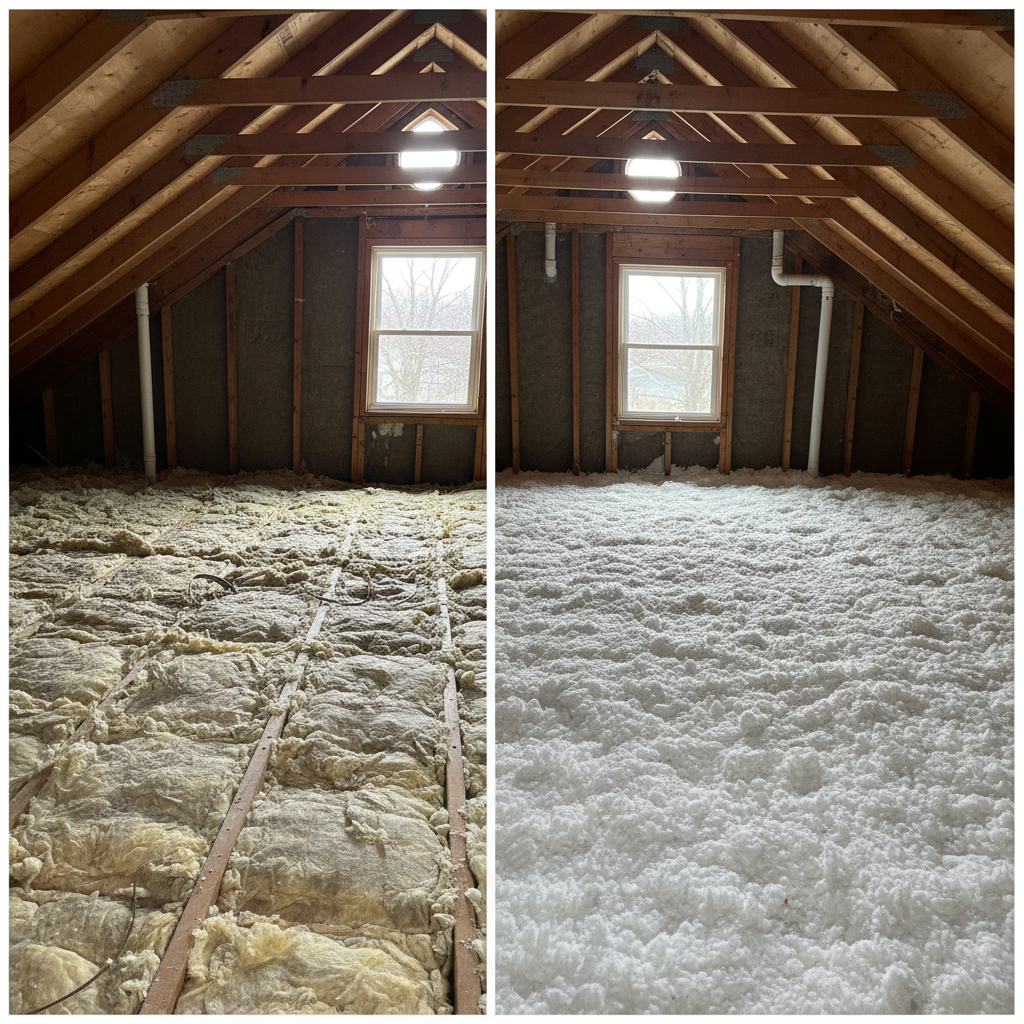
So, you're thinking about beefing up your home's insulation. Blown-in insulation? That's a smart move, definitely. It works wonders in attics, within walls, and in all those tricky, hard-to-reach spots. But then you hit the big question: cellulose or fiberglass? It's not just about which one costs less, you know. It's really about what's going to do the best job for your home over the long haul, especially with the wild weather we get here in Arlington Heights.
What's the Scoop on Blown-In Cellulose?
Cellulose insulation is basically old paper products, mostly newspaper, that have been treated with fire retardants. It's dense, it's heavy, and people generally agree it performs really well. Think of it like a thick, cozy blanket for your whole house.
Pros of Cellulose:
- Great Air Sealing: Because it's so dense and fine, cellulose does an amazing job of filling every tiny crack and crevice. This is a huge deal for stopping drafts and making your home's air sealing much better, which, of course, means better energy efficiency.
- Good R-Value: You'll usually see an R-value of around R-3.5 to R-3.8 per inch. That's pretty solid, and its density helps keep that R-value strong even when it's freezing outside.
- Eco-Friendly: It's made from recycled stuff, so if being green matters to you, cellulose definitely wins here.
- Fire Retardant: The treatments they apply make it resistant to fire; it often performs even better than untreated wood.
- Sound Dampening: That same density also helps quiet outside noise. That's a nice little bonus if you live near a busy street or, well, have neighbors who like to party.
Cons of Cellulose:
- Moisture Issues: This is the big one, no doubt about it. If cellulose gets wet and stays wet, it can clump up, lose its R-value, and even settle. It can also become a breeding ground for mold if it doesn't dry out properly. That's why good attic ventilation and fixing any leaks before we install it are absolutely critical.
- Weight: It's heavier than fiberglass, for sure. Most homes can handle it just fine, but if your home is older with, shall we say, questionable structural integrity, it's something to think about.
- Dusty Installation: It can be a bit messier to put in compared to fiberglass, though a good crew like us at Allied Insulation will always keep that to a minimum.
What About Blown-In Fiberglass?
Fiberglass insulation is made from tiny glass fibers, often with a good chunk of recycled glass in the mix. It's lighter and feels more airy than cellulose. You've probably seen it in those big batts, but the blown-in version is just loose fibers.
Pros of Fiberglass:
- Moisture Resistant: Fiberglass doesn't soak up water like cellulose does. If it gets wet, it'll dry out without losing its R-value or encouraging mold growth, assuming you fix the source of the moisture. This is a big plus during our humid summers or if you happen to get a roof leak.
- Lightweight: It won't put as much stress on your ceiling structure.
- Non-Combustible: It's naturally fire-resistant since it's made of glass.
- Pest Resistant: Pests generally aren't keen on making a home in fiberglass.
- Stable R-Value: It holds its R-value well over time and doesn't settle nearly as much as cellulose can. You're looking at R-2.5 to R-3.0 per inch.
Cons of Fiberglass:
- Less Dense Air Sealing: While it fills cavities, it's not as dense as cellulose. So, it might not stop air movement quite as effectively all by itself. You'll need to be extra careful with air sealing before we blow in fiberglass.
- Lower R-Value Per Inch: You'll need more inches of fiberglass to hit the same R-value as cellulose. This can be a factor if you're working with limited attic space, right?
- Irritant: Those glass fibers can irritate skin, eyes, and lungs during installation, so proper protective gear is a must.
Cost, Durability, and Maintenance
Cost: Generally, fiberglass is a little cheaper per bag or per installed R-value than cellulose. However, the total project cost can end up being pretty similar, depending on the R-value you're aiming for and how much prep work is needed.
Durability: Both materials are very durable when installed correctly. Cellulose can last for decades if it stays dry. Fiberglass is also super long-lasting and isn't as bothered by moisture damage.
Maintenance: Neither really needs much maintenance once it's in. The main thing is making sure your attic stays dry and well-ventilated, no matter which material you pick. Just keep an eye out for roof leaks or any condensation issues.
My Recommendation for Arlington Heights Homes
Considering our Illinois climate — those brutal cold winters and often damp, humid summers — I tend to lean towards blown-in fiberglass for most attic jobs. Here's my reasoning:
Fiberglass's moisture resistance is a huge factor. We see a lot of condensation in attics during extreme cold, and roof leaks, well, they just happen. If cellulose gets wet, it's a real headache to deal with. Fiberglass handles moisture much better, drying out without long-term damage or mold worries, assuming you fix the moisture source quickly.
Now, this doesn't mean cellulose is bad; not at all! For certain wall cavities or specific situations where its density for soundproofing is key, it can be a fantastic choice. But for a typical attic in an Arlington Heights home, especially one built in the 60s or 70s with standard ventilation, fiberglass just offers a bit more comfort against the elements.
The most important thing, no matter which material you choose, is to make sure your attic is properly air-sealed before any insulation goes in. Air sealing is the unsung hero of home energy efficiency, truly. If you've got gaps and cracks letting air leak between your living space and your attic, no amount of insulation will perform its best. That's where we come in. We'll check out your attic, suggest the right R-value for our area, and make sure the job's done right, whether it's cellulose or fiberglass. Give Allied Insulation a call; we're here to help you make the best choice for your home.