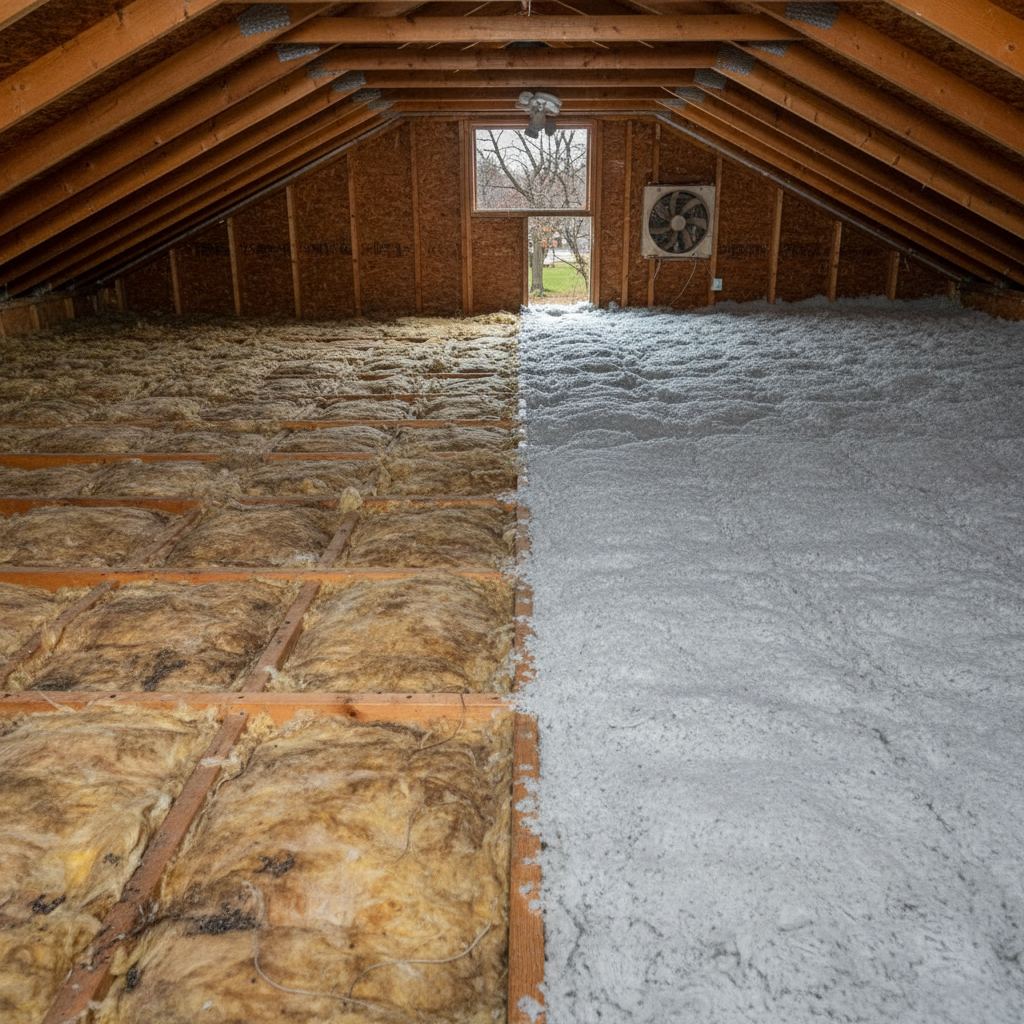
So, you're looking into upgrading your attic insulation, huh? Good idea. That's honestly one of the smartest things you can do for your house, especially with the crazy weather we get here in Illinois. But once you start digging, you'll quickly see there are a few main choices, and it can get pretty confusing, fast. Today, I want to chat about two big players: blown-in insulation (that's either cellulose or fiberglass) and closed-cell spray foam. I'm not going to sugarcoat it for you; each has its good points and bad points, and what works for your neighbor might not be the right fit for your place.
Blown-In Insulation: The Old Reliable
When I talk about "blown-in," I'm usually thinking about either cellulose or fiberglass. Both come in these big bags, and we use a special machine to blow them right into your attic. It creates this nice, fluffy blanket up there. Picture it like a giant duvet for your ceiling, you know?
Cost: This is where blown-in really shines. It's usually the cheapest way to go, at least upfront. You'll get plenty of R-value for your money, making it an easy choice for most homeowners who want to cut down on energy bills without emptying their savings.
Installation: For us, it's a pretty quick and clean job. We can often finish an attic in a single day, sometimes even less, depending on how big it is. We're not dealing with a bunch of chemicals or waiting for things to cure, so your house gets back to normal pretty fast.
Effectiveness: Blown-in insulation does a solid job of keeping heat where it belongs. If we make sure your attic is properly air-sealed before we blow in the insulation, you'll definitely notice a difference in your energy bills and how comfortable your home feels. It's fantastic for filling in all those little gaps and corners in an open attic space.
Durability & Maintenance: It lasts a long time, usually as long as your house does, as long as nobody messes with it. The main thing to watch out for is moisture. If your roof leaks, blown-in insulation can get wet, flatten out, and then it won't insulate as well. Pests can also be a problem if your attic isn't sealed up tight enough. Otherwise, it really doesn't need much looking after.
Closed-Cell Spray Foam: The New Kid on the Block
Now, closed-cell spray foam? That's a whole different animal. We mix two liquids right there on your property, and when they hit the surface, they react, puff up, and turn into this super dense, hard foam. It's a much more specialized kind of job.
Cost: Let's be straight: closed-cell spray foam costs more than blown-in, often quite a bit more. It's a premium product, and the specialized gear and know-how needed to put it in correctly drive up the price.
Installation: This is not something you should ever try to do yourself. It takes trained pros, like us here at Allied Insulation, who know how to handle the chemicals safely and apply it just right. There's a specific process, including making sure the area is well-ventilated during application and then a curing period. That might mean you need to be out of the house for a little while.
Effectiveness: This is where closed-cell foam truly shines. It has a higher R-value per inch than blown-in, which means you get more insulating power from a thinner layer. But the real game-changer is how it creates an air and vapor barrier. It seals off your attic completely, stopping drafts and moisture cold. This is a huge benefit for our humid summers and freezing winters here in Arlington Heights, especially for older homes around Dryden Park that might have drafty attics, don't you think?
Durability & Maintenance: Once it's set, closed-cell spray foam is incredibly tough. It won't settle, sag, or break down over time. It also resists moisture and pests, which is a big plus. You won't ever need to worry about maintaining it.
My Thoughts for Arlington Heights Homeowners
Alright, so which one should you pick? Here's my honest opinion:
If your main goal is to make your home more energy-efficient on a tighter budget, and your attic is already pretty well air-sealed, then blown-in cellulose or fiberglass is an excellent choice. You'll definitely see a good return on your investment, and your home will feel much more comfortable.
However, if you're looking for the absolute best performance, are willing to spend more upfront, and especially if you have an older, drafty attic or are dealing with moisture issues, then closed-cell spray foam is the better option. The air and vapor barrier it creates is simply unmatched, giving you a level of comfort and protection that blown-in just can't touch. It turns your attic into a conditioned space, which can even let you move your HVAC ducts up there without losing efficiency.
Ultimately, it really comes down to your budget, what you want to achieve, and the exact condition of your attic. Either way, getting your attic insulation up to par will make a world of difference in how comfortable your home is and what you pay for energy. Give us a call at Allied Insulation if you want to chat through your options and get a free estimate. We're here to help you make the right decision for your home.